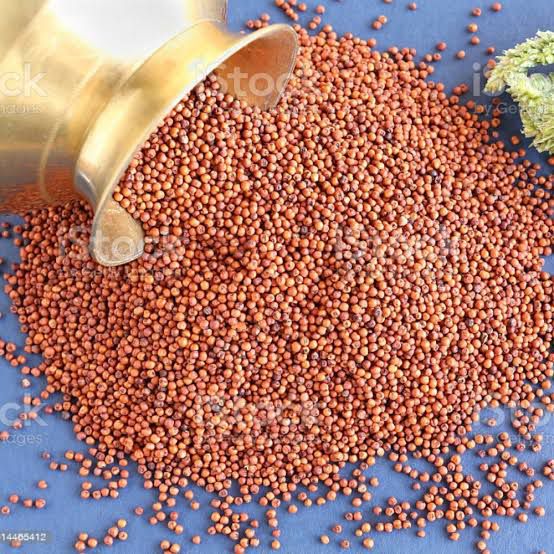
Industrial Benefits and Applications of Millet
Millet is an ancient grain cultivated in arid and semi-arid regions, serving as a staple crop in parts of Africa and Asia, including Sudan. Beyond its role as a dietary staple, millet offers diverse industrial applications across food processing, animal feed, pharmaceuticals, cosmetics, and sustainable agriculture.
✅ Industrial Benefits and Uses of Millet
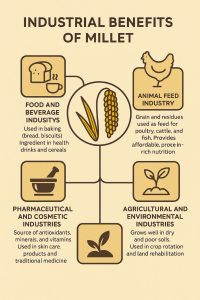
1. Food and Beverage Industry
-
Millet is used in the production of:
-
Gluten-free flour for bread and pastries.
-
Healthy breakfast cereals.
-
Ready-to-eat meals and nutritional supplements for athletes.
-
Traditional energy drinks such as “Asida” or “Madida al-Dukhn” in Sudan.
-
2. Animal Feed Industry
-
Millet grains or by-products are used as:
-
A protein- and fiber-rich source in poultry and livestock feed.
-
An economical alternative to barley or corn in commercial farms.
-
3. Pharmaceutical and Cosmetic Industries
-
Rich in beneficial compounds like phytosterols and antioxidants, millet is used in:
-
The production of dietary supplements.
-
Skincare products to combat dryness and wrinkles.
-
Natural cosmetics, due to its anti-inflammatory properties.
-
4. Agricultural and Environmental Applications
-
Millet plant residues are used for:
-
Producing organic compost.
-
Mulching, to retain soil moisture and reduce weed growth.
-
Soil rehabilitation in desert areas as part of sustainable farming practices.
-
5. Innovative Industrial Uses
-
Millet straw fibers are increasingly used in:
-
The production of natural paper.
-
Eco-friendly packaging materials.
-
Experimental applications in insulation boards and biofuel production.
-
♻️ Additional Industrial Advantages
-
Fast-growing and thrives in poor soils without requiring large amounts of water or fertilizers.
-
Naturally gluten-free, making it highly desirable in specialty food industries.
-
Generates organic waste that is easily recyclable and compostable.